


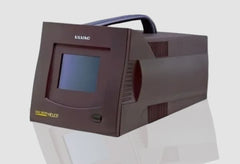
Leak Detectors
Hidden leaks can create serious issues across industries such as automotive manufacturing, electronics, food production, pharmaceuticals, air conditioning, and space development. A reliable leak detection system helps identify even small leaks quickly and efficiently, reducing product risk and protecting quality standards.
Ezzi Vision supplies advanced helium leak detectors and helium leak detection equipment designed to support accurate, fast, and dependable testing across a wide range of applications.
Why Worry About Leaks?
Undetected leaks can compromise product quality, safety, and reliability. In some industries, leaks can result in product recalls, production delays, loss of customer trust, and unnecessary financial losses.
Helium leak detection equipment helps businesses identify issues before they become costly failures, making it an important part of quality control and production testing.
The Solution: Ezzi Vision Helium Leak Detectors
Ezzi Vision offers helium leak detectors designed to detect tiny leaks with speed and accuracy. Our range includes high-performance systems for demanding production environments as well as portable solutions for flexible testing needs.
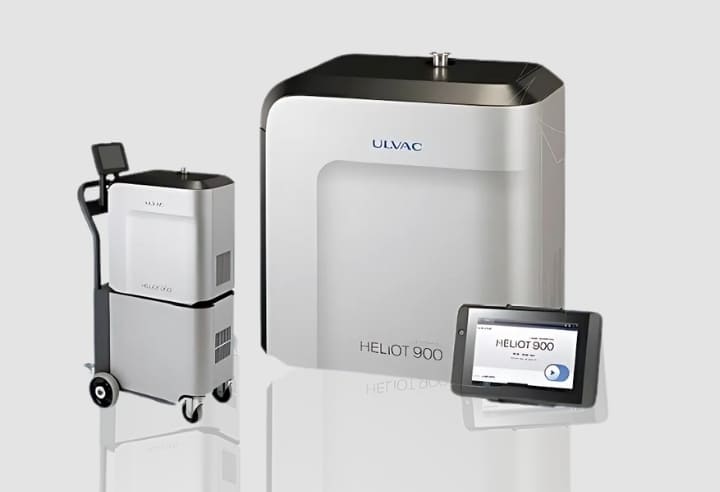
The HELIOT 900 Series is ideal for high-volume and high-precision applications where speed, sensitivity, and productivity are critical.
The HELIOT 100 Series is a portable dry helium leak detector designed for flexible leak testing and quick setup.
Benefits of Helium Leak Detection Equipment
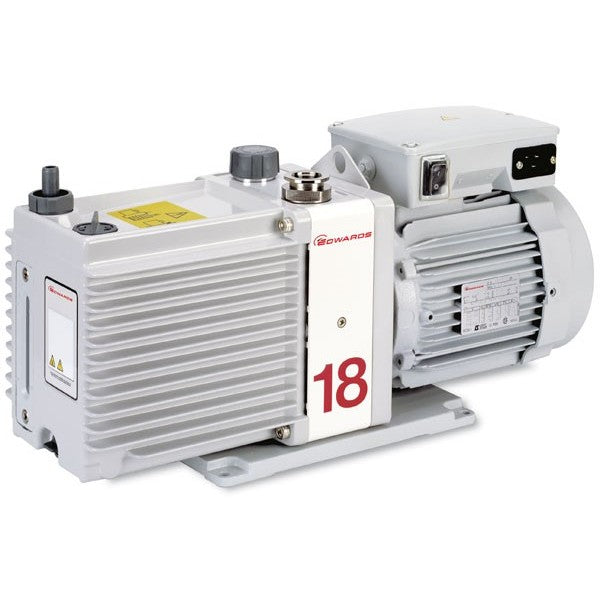
High-performance pumping and detection systems help reduce testing time in production environments.
Helium leak testers are designed to detect very small leaks with reliable sensitivity.
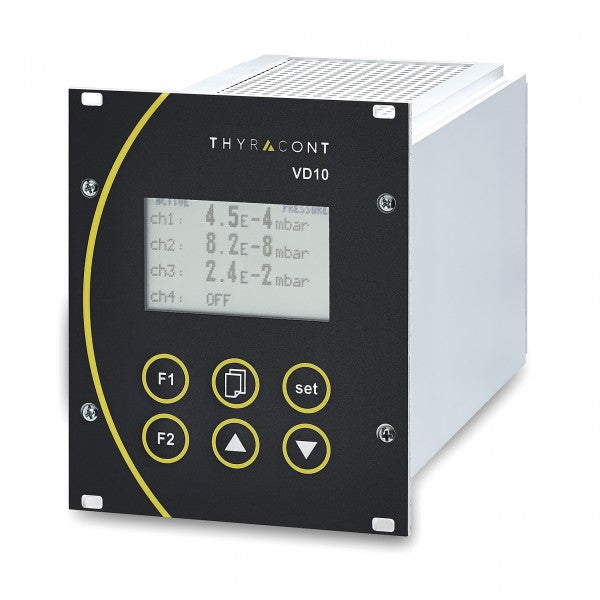
Modern touch screen interfaces make the equipment easier to operate and help reduce user error.
Tool-free access panels and service-friendly designs help reduce downtime.
Real-World Applications
Helium leak detectors are used to test components such as torque converters, fuel tanks, wheels, suspension components, and brakes.
Leak detectors can be used for condensers, evaporators, compressors, and heat exchangers to support reliable system performance.
Helium leak testing is useful for semiconductors, SAW devices, quartz crystals, ICs, and other sensitive electronic components.
Leak detection helps protect product integrity by identifying packaging or storage leaks that may affect safety, quality, or shelf life.
Choosing the Right Helium Leak Tester
When selecting helium testing leak detection equipment, it is important to consider accuracy, speed, ease of use, maintenance requirements, and portability.
- Accuracy: Choose equipment that can detect the smallest leaks required for your process.
- Speed: Look for fast pumping speed to reduce test cycle time.
- Ease of Use: A user-friendly interface can reduce operator error and training time.
- Maintenance: Easy access and simple servicing can help reduce downtime.
- Portability: Select a portable solution if leak testing needs to be performed in multiple locations.
Need Helium Leak Detection Equipment?
Do not let hidden leaks compromise your products or processes. Ezzi Vision can help you find the right helium leak detector for your application.
Contact Ezzi VisionFrequently Asked Questions
What helium leak detection sensitivity is required for pressure vessel and vacuum system acceptance testing in Australian industrial and manufacturing settings?
Acceptance leak rate specifications vary by application. Common industrial standards include: less than 1 x 10^-8 mbar L/s for high-vacuum systems and precision instruments, less than 1 x 10^-6 mbar L/s for refrigeration and air conditioning systems, and less than 1 x 10^-4 mbar L/s for general pressure vessels. Regulatory references include AS 4041 (Pressure Piping) and ISO 20485 (Leak Testing). Ezzi Vision's helium leak detection equipment from Hiden Analytical covers the sensitivity range required for all these applications.
How is helium leak testing integrated into a production quality control process for sealed components or pressure vessels?
Helium leak testing can be integrated into production QC as: a 100% production inspection step using an automated test station, a statistical sampling process using portable or semi-fixed leak detectors, or as part of a final acceptance test prior to dispatch. Integration options include: conveyor-fed automated test chambers, robotic sniffing systems, or manual sniffer probes. Ezzi Vision can advise on the appropriate level of automation for your production volume and leak rate specification.
What staff training and competency requirements apply to operators conducting helium leak testing in an AS/NZS or ISO-accredited testing facility?
Helium leak testing is classified as a Level 1, 2, or 3 Non-Destructive Testing (NDT) discipline under ISO 9712 and AS 3998. Production operators performing routine leak tests typically require Level 1 training and certification; personnel interpreting results and specifying test procedures require Level 2. Training is available through AINDT (Australian Institute for Non-Destructive Testing). Ezzi Vision can provide equipment-specific operational training as part of the instrument commissioning process.
Can Ezzi Vision supply helium leak detection equipment with calibration traceable to Australian national standards?
Yes. Helium leak detector calibration with traceability to Australian national measurement standards (maintained by CSIRO's National Measurement Institute) is available through NATA-accredited calibration laboratories in Australia. Ezzi Vision can co-ordinate initial calibration of leak detection equipment at time of supply and advise on appropriate recalibration intervals (typically 12 months) for your quality management system.
What is the difference between the vacuum method and the sniffer method for helium leak testing, and which is appropriate for our application?
The vacuum method involves evacuating the test part or enclosing it in a helium-filled chamber while the leak detector samples the vacuum side - this is the most sensitive method (down to 10^-12 mbar L/s) and is used for sealed or evacuated components. The sniffer method uses a hand-held probe to scan the outside of a pressurised (helium-filled) component - sensitivity is lower (~10^-7 mbar L/s) but the method is flexible and suitable for large or complex assemblies. Ezzi Vision can recommend the appropriate method for your component geometry, production volume, and required sensitivity.
What are the ongoing operational costs of running helium leak detection equipment in a production or QC environment?
Ongoing operational costs for helium leak testing include: helium gas consumption (typically 1-5 litres per test depending on component volume and test duration), pump maintenance (oil-sealed backing pumps require periodic oil changes and filter replacement), and annual instrument calibration. Helium is the dominant consumable cost - at approximately AUD $8-12 per litre for industrial-grade helium in Australia. Ezzi Vision can help estimate your annual helium consumption based on test volume and component size.


Choose Ezzi Vision
Vacuum, Lithography, Thin-Film Experts
Experience top-tier repair and maintenance services for glovebox and vacuum equipment, backed by industry expertise across Australia.
Contact Us
Leading Expertise
30+ Years in Tech

Comprehensive Range
1600+ Products

Technical Support
Expert guidance

Lorem, ipsum dolor.
Lorem ipsum dolor sit.